Todd Palmer's third book · The gold is in the cracks
Success won't make you happy.(and what will)
You have the company, the title, and every outward proof that you made it. You still cannot shut your mind off. You still cannot hand the thing off. And you cannot remember the last time winning felt like enough.
Traumapreneur is the book for the founder who built something real and is starting to wonder whether the traits that got them there are now the ceiling on the company, the people, and the life.
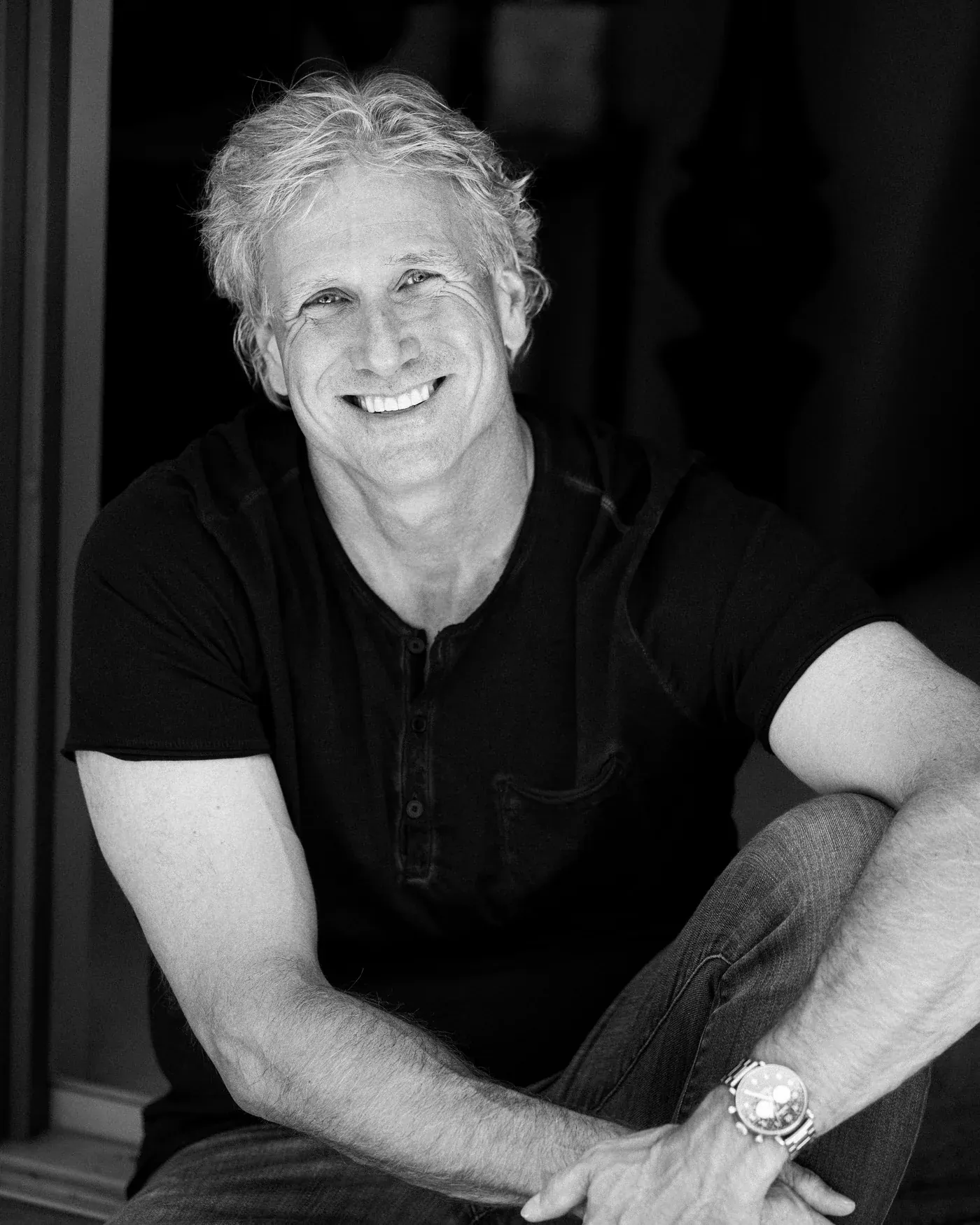
Todd Palmer, executive coach, author, and six-time Inc. 5000 CEO.
Traumapreneur · Palmer
Published
November 17, 2026
Publisher
JETLAUNCH
Formats
Paperback & Kindle
Paperback
360 pages · $19.99
The quiet cost
The things that built the company can become the things limiting it.
Personal patterns become organizational patterns. The company starts to mirror the internal operating system of the person leading it. You call it standards. Your team calls it something else.
Control
creates bottlenecks. Nothing moves until it has passed through you, so the company can only grow as fast as your attention.
Hyper-independence
makes delegation feel like a risk. Deep down, everything still depends on you, and you have the evidence to prove it.
Perfectionism
slows decisions. Good enough never ships, because shipping would mean being seen before the work is defensible.
Reactivity
erodes trust. The room learns to manage your weather instead of telling you the truth.
Relentless drive
becomes workaholism. The trait everyone praised is the one that will not let you leave the building, even in your own head.
Vigilance
makes it impossible to shut off. Rest feels like exposure. Stillness feels like something is about to go wrong.
Somewhere along the way, you stop using the behavior. The behavior starts using you. The thing you keep calling an accountability problem might be partly an inability to delegate. The thing you keep calling a people problem might be partly a need for control.
This is not a diagnostic book. It is a pattern-recognition book.
You can't solve an internal problem with external success.
A letter to the person who already won
You did the thing they said would fix it.
You made payroll. Then you made it again. You hired, you hit the number, you took the title, and you told the comeback from the stage. On a Tuesday you cannot name, you noticed that the feeling you were building toward never moved in.
If that is you, nobody is asking you to become less ambitious. Your intelligence is real. Your courage is real. Your work ethic and the thing you built are real. The same traits can, over time, become the ceiling on all of it.
You don't have to lose your drive. You need to understand what is driving it. Most high achievers learn to hide the cracks, build over them, and get extraordinarily good at proving they aren't there. Wholeness is not pretending you were never broken. It is being able to see what shaped you without shame, and to recognize that the history of the piece is part of its beauty.
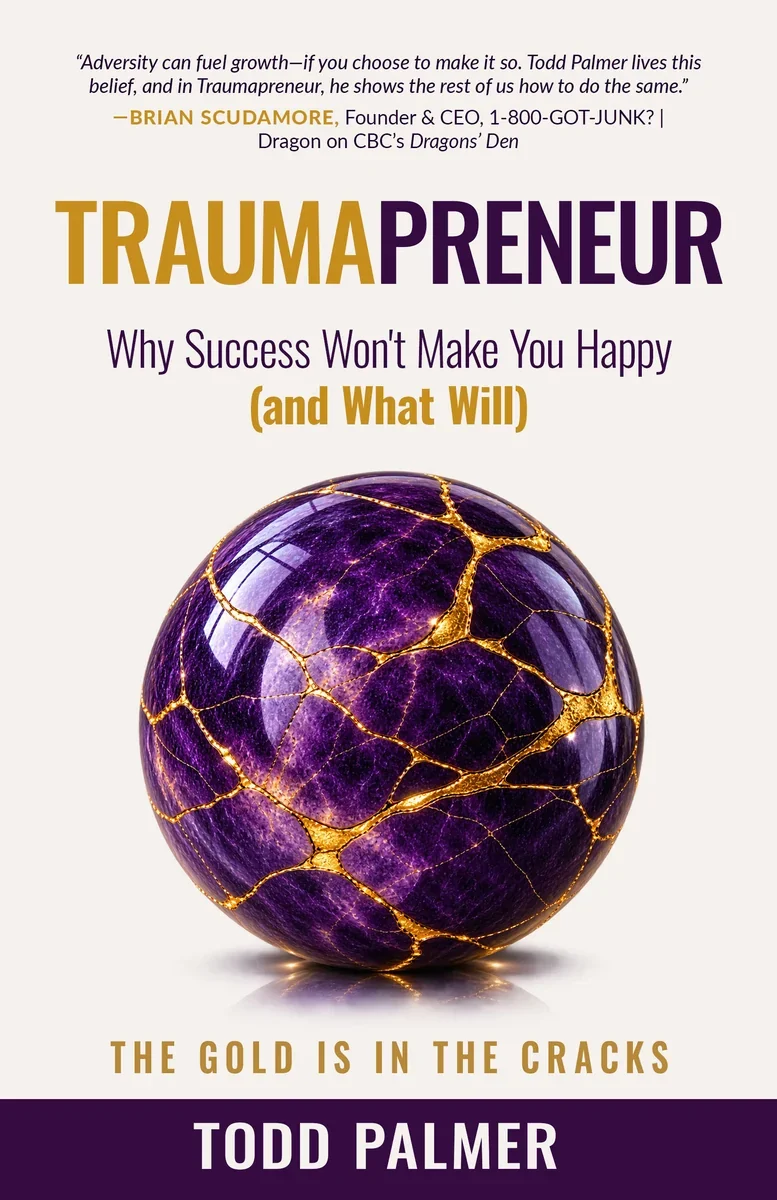
That is the kintsugi on the cover. Broken pottery repaired with lacquer and gold. The lines stay visible. The gold is not covering the flaw. The gold helps you see that the break is part of the object. The gold is in the cracks.
Why the sphere is on the cover
The gold doesn't erase what happened.
You spent years learning how to become successful. No one taught you how to feel successful. The cost does not always show up on the P&L. Sometimes it shows up in a marriage, in the distance with your children, in friendships you stopped making time for, or in the quiet fact that you built the life you said you wanted and still do not feel like enough.
Workaholism can look like commitment. Perfectionism can look like excellence. Control can look like leadership. Hyper-independence can look like strength. Until they don't. And sometimes the people around you feel the cost before you do.
The version of the story he could tell from the stage. And the part he couldn't.
$600,000
in debt, in a company he had spent years building.
60 days
from running out of cash. Close enough to feel the doors.
6×
Inc. 5000, after he rebuilt it. The comeback is the public half.
Todd Palmer started Diversified Industrial Staffing in 1997. He spent 25+ years in industrial staffing. After the recession, the company was nearly $600,000 in debt and about 60 days from running out of cash. He has written that he nearly missed payroll, hired the wrong people, lost customers he could not afford to lose, and made more mistakes than he cares to remember.
He rebuilt that company into a six-time Inc. 5000 business, listed in 2007, 2008, 2009, 2010, 2012, and 2013. That is the version of the story he has told from a lot of stages.
I was carrying things into that office every morning that I didn't understand, and I didn't recognize how much they were influencing the way I worked, led, controlled, reacted, and defined success.
He didn't have language for it then. He has said he is not sure he would have used the language even if he had. He wrote this book for entrepreneurs who have built something successful and are beginning to wonder whether some of the very traits that helped them get there are now getting in their way.
2007
2008
2009
2010
2012
2013
Six Inc. 5000 listings for Diversified Industrial Staffing.
The framework
Recognition isn't enough. HEAL is how you work with what you see.
Seeing the pattern is the beginning. Traumapreneur introduces the HEAL framework: a practical way to understand the patterns you recognize, explore where they came from, and begin changing your relationship with them.
H
Hurt
What are you carrying, and how is it driving you? It starts with recognizing that you bring your crap to work, and that it is in the room whether you name it or not.
E
Explore
See the pattern underneath the behavior. Notice the story you tell yourself when somebody disappoints you, and consider that by and large people believe they are doing the right thing for the right reasons.
A
Adapt
Build new habits and new rules of engagement. Here is how I am going to show up, and here is a safe way to call me out when I don't.
L
Lead
Lead with greater awareness, accountability, and choice. Here is how I have led, here is how I am going to change, and here is how you can hold me accountable.
Not a new system to install. A way to see the person installing it.
There is no hardcover. An audiobook is being recorded and is expected in the first quarter of 2027. What you can buy today is the paperback and the Kindle edition, published by JETLAUNCH.
Why the traits that made you successful can turn on you once they are overused, and why they are so hard to see from the inside.
How control, hyper-independence, perfectionism, reactivity, drive, and vigilance show up as company problems with nicer names.
The comeback story, and the part that does not fit on a slide: what you carry into the office before the day starts.
The HEAL framework, including a safe way for other people to call you out when you don't show up the way you said you would.
Why a full calendar can still leave you alone with the decision, because nobody gets the version of you from before the story is presentable.
A clear line: this is pattern recognition, not a diagnosis, and it is not a substitute for therapy.
This book is probably for you if
You hit the number and felt almost nothing.
You hit the number and felt almost nothing, and there was nobody you could say that to.
You have normalized the exhaustion and stopped noticing what it costs you.
You struggle to delegate because deep down you believe everything ultimately depends on you.
You call it high standards, but your team experiences it as control.
You have built a company that cannot function the way you want unless you are constantly involved.
Your spouse, children, or leadership team may be feeling the cost of your patterns before you are.
You are carrying something from before the company that keeps showing up inside it.
And it is not for you if
You want the team fixed and yourself left out of it.
It is not a hiring script, a meeting cadence, or a new operating system for the company. It will not hand you a diagnosis. It is not therapy, and it is not a substitute for therapy.
If what you want is a way to correct everyone else while your own leadership stays unexamined, this book will feel like the wrong assignment. That is useful information. The people it is written for are already successful enough to suspect that working harder is no longer the fix.
You spent years building something that works. Maybe now the work is understanding the person who built it.
You can have a full calendar and still be alone with it.
You have a leadership team. Maybe a board, a Forum, a spouse who asks how it went. On paper you are not isolated at all. Think about the last genuinely hard thing you decided. By the time you told anyone, had you already cleaned it up? Organized the facts, cut the embarrassing parts, and arrived with a version you could defend?
It is not that there is no one to call. It is that nobody gets access to you before the story is presentable.
Endorsement
What Brian Scudamore said about Traumapreneur
Adversity can fuel growth—if you choose to make it so. Todd Palmer lives this belief, and in Traumapreneur, he shows the rest of us how to do the same.
Brian ScudamoreFounder & CEO, 1-800-GOT-JUNK? · Dragon on CBC's Dragons' Den
About the author
Todd Palmer, executive coach, author, and six-time Inc. 5000 CEO.
Todd is a Detroit executive coach, Forum retreat facilitator, and Vistage speaker. As CEO he rebuilt his staffing company from about $600,000 in debt and 60 days from running out of cash into a six-time Inc. 5000 company. He has spent 25+ years in industrial staffing.
Traumapreneur is his third book. He also wrote The Job Search Process (2015) and From Suck to Success (2021). From Suck to Success: A Guide For Extraordinary Entrepreneurship is an Amazon bestseller in small-business categories, and he uses the same story from the stage that the books tell.
He has been a guest on 130+ podcasts, including I AM CEO, Industrial Talk, Paper Napkin Wisdom, The Business Power Hour, and SharkPreneur.
If the book hits home, Todd offers one-to-one executive coaching on these patterns, and he facilitates Forum retreats and workshops. The core workshop is Psychological Safety: Creating Safe Space to Encourage Your Team's Best Work, adapted for EO Forums, Vistage groups, and leadership teams. He has facilitated 75+, rated 9.7/10 in post-event surveys.
Speaker reel
The video loads from YouTube when you press play. Nothing is fetched before that.
You don't need a diagnosis or a dramatic origin story. Todd calls this a pattern-recognition book, not a diagnostic one. It is for anyone who senses that something they carry from before the company keeps showing up inside it.
"I don't want to get less hungry."
The book is not asking you to become less driven, less successful, or less ambitious. The drive can stay. What changes is whether you can see what is driving it, and whether that pattern still serves the company and the life.
"My problem is my people."
Maybe. It is also possible that the thing you are calling a people problem is partly a need for control, and the thing you are calling an accountability problem is partly an inability to let go. The company mirrors the person leading it.
"I already know this."
Recognition isn't enough. HEAL is the part after the insight: new habits, rules of engagement, and a way for other people to hold you to the change you said you wanted. Knowing the pattern and changing your relationship to it are different jobs.
"Is this therapy?"
No. It is not a substitute for therapy or clinical care. It is a book about how patterns show up in the way you lead, decide, delegate, and define success. If you need a clinician, get a clinician. This will not pretend to be one.
FAQ
Before you order.
Paperback and Kindle are on Amazon now. If you want the opening pages before you buy, Todd will send the introduction and Chapter 1.
It's out now. Traumapreneur was published November 17, 2026.
What is it about?
Why success often doesn't feel the way founders expected, and how patterns formed earlier in life shape the way they lead and the companies they build. Control, hyper-independence, perfectionism, reactivity, relentless drive, vigilance.
What is the HEAL framework?
Hurt: what you're carrying and how it drives you. Explore: the pattern underneath the behavior. Adapt: new habits and rules of engagement, including a safe way for others to call you out. Lead: leading with more awareness, accountability, and choice.
Where do I buy it, and what does it cost?
Paperback and Kindle, on Amazon, published by JETLAUNCH. The paperback is $19.99 (ISBN 979-8-89079-573-1, 360 pages). The Kindle edition is ASIN B0HM3W8NH8 (ISBN 979-8-89079-574-8). There is no hardcover. An audiobook is being recorded and is expected in Q1 2027.
Who should read it?
Founders, CEOs, and owners who hit the number and felt almost nothing, can't delegate because everything seems to depend on them, or have a company that can't run without them.
Who is Todd Palmer?
A Detroit executive coach, author, and six-time Inc. 5000 CEO. He turned his staffing company around from near-bankruptcy to six Inc. 5000 listings. He wrote From Suck to Success and The Job Search Process, and he facilitates EO Forum retreats and Vistage sessions.
How is this different from From Suck to Success?
From Suck to Success (2021) is his guide for extraordinary entrepreneurship. Traumapreneur is the book about why the success still doesn't feel the way you expected, and what to do with the patterns underneath how you lead. Same author. A different question.
The gold is in the cracks
You spent years learning how to become successful. No one taught you how to feel successful.
What is driving you, and is it still serving you? The paperback and the Kindle edition are on Amazon.
A version of the book formatted to upload directly into ChatGPT, Claude, Grok, Gemini, or Microsoft Copilot, so you can coach yourself through the HEAL Framework with your AI.
1 Enter your first name and email.
2 Buy the book on Amazon.
3 Forward your Amazon receipt, and we'll email you the AI Edition.